During our preparations for the current exhibition of photographs the Wychwoods Library in Milton (July-September 2026) , we revisited these two pictures of a tableau of the 1930 fete at Ascott under Wychwood, with its banner ‘The Wedding of the Painted Doll’. The float is draped in flowers and greenery, carries a bridal couple, a solemn ‘minister’, and a retinue of doll‑like attendants.

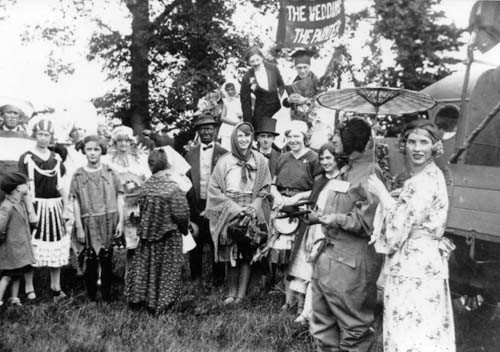
What Do We See?
In the 1930s and 1940s it was instantly recognisable. The scene on the float is a local re‑imagining of a musical number from early Hollywood. It was a hit song-and-dance sequence in The Broadway Melody (1929), written by Arthur Freed and Nacio Herb Brown.
Here is the performance as it would have been seen in cinemas throughout the UK.
About the Song
The song describes a toy‑box wedding procession, celebrated as a holiday. The chorus announces that “today’s the wedding of the painted doll”, with storybook characters such as Red Riding Hood, Buster Brown, and a jumping jack arriving as guests. Church bells ring while ‘little dollies from the follies’ gather with their painted cheeks.
The film routine narrates the ceremony, and features:
- Bridesmaids in fancy laces who take their places.
- The bride, a ‘little cutie’ and ‘little beauty,’ appears.
- A preacher man opens his ‘little black book,’ confident because he has performed the ritual many times.
- The bridegroom arrives, slightly nervous, and the preacher pronounces them married ‘to stay.’
The chorus repeats, celebrating the whimsical, toy‑like wedding and the spreading of the news with ‘rice and shoes’.
Choosing such a theme as The Wedding of the Painted Doll shows a 1930s village in step with wider popular culture. It reminds us that communities in the Wychwoods were certainly not isolated from the wider world, and were absorbing new trends as part of older, established festival traditions.